Your first multi-day hike is a strange kind of test. Nothing on a day walk quite prepares you for the second morning, when your legs have stiffened and there are still eighteen kilometres between you and the car. The good news is that the mistakes that spoil most first trips are predictable, and almost all of them are fixable with a bit of planning before you leave.
Pacing: starting faster than your body can afford
Fresh legs lie to you. In the first hour of a long trip it feels natural to move at your day-walk speed, chatting, overtaking people, ticking off the kilometres. Four hours later the same pace is impossible, and you spend the afternoon paying for it in ten-minute stops.
Start deliberately slow. For the first half hour, aim for a pace where you could hold a full conversation without pausing for breath. If you can only manage short sentences, ease off. This feels ridiculous on a flat path in the morning and saves you on the climb at four in the afternoon.
Two habits help enormously:
- Break before you need to. A ten-minute stop every hour keeps you steady. A ninety-minute push followed by a forty-minute collapse wrecks your rhythm and your morale.
- Plan shorter days than you think you can manage. If your training walks are 15 km, don't book a first trip with 25 km days. Terrain, pack weight and tiredness all slow you down, and the hills are always steeper than the map suggests.
Also decide in advance what your bail-out options are. Knowing there's a shortcut, a bothy or a bus at the halfway point makes a hard day feel manageable instead of frightening.
Food: too little, too heavy, or nothing you want to eat
Appetite behaves oddly when you're tired and working hard. Many people who eat enthusiastically at home find they can barely face a sandwich by mid-afternoon. That's why the food you carry needs to be food you actually want, not just food that looks sensible in the shop.
What to pack and when to eat
Eat something small every hour rather than waiting for a proper lunch. Nuts, oatcakes with cheese, flapjack, dried fruit, boiled sweets and a few squares of chocolate all work. Keep a handful of snacks in a hip-belt pocket or jacket pocket so you don't have to stop and dig through your pack.
For the evening, choose meals that need only hot water and a short wait, and carry a little more than you calculate. A spare day's worth of food is not wasted weight; it's what turns a delayed day into an inconvenience rather than a problem. Bring something salty as well as something sweet — after a long sweaty day, crisps or a stock cube often appeal more than another cereal bar.
Water and refills
Don't assume you'll find water where the map shows a stream. Upland springs dry up in summer, and farm troughs aren't reliable. Carry enough for the longest dry stretch of the day, top up whenever you pass a good source, and treat water from streams and lakes unless you're certain it's clean — a filter or purification tablets are light and remove the guesswork. If you have any doubt about the safety of a water source, treat it anyway.
Weather: noticing it too late
Checking the forecast once, three days out, is not planning. Mountain weather changes within a few hours, and valleys are often calm while the ridge above is in cloud and forty-mile-an-hour wind.
Read the forecast the night before and again over breakfast, and look at the wind speed and the cloud base, not just the temperature. If the forecast is marginal, decide your turn-around time in advance: "if we're not at the col by 2pm, we go back the way we came." That decision is much easier to make over a mug of tea than on a exposed slope in horizontal rain.
Rain changes the ground underfoot, too. Rivers rise quickly after heavy rain, and a crossing that was ankle-deep in the morning can be genuinely dangerous by evening. If a crossing looks doubtful, walk upstream to find a safer place, or turn back. No summit is worth a cold, fast river.
Navigation: one device and blind faith
A phone with a mapping app is a brilliant tool and a terrible single point of failure. Batteries die in the cold, screens crack, and signal disappears exactly where you need it. Take a paper map of the whole route with a compass, and know how to use both before you go.
Good habits on the move:
- Check your position every hour or at every junction, even when the path seems obvious.
- Download offline maps and carry a charged power bank, plus a cable you've tested.
- Don't follow footprints just because someone else went that way. People get lost in groups, and a worn path can lead to a viewpoint rather than your destination.
- Leave your route and expected finish time with someone at home, and message them when you get out.
Navigation errors get worse as you tire. Late in the day, when you're hungry and the light is going, even a confident walker can misread a path. If something doesn't match the map, stop, eat something, and work it out properly rather than pressing on hopefully.
Feet, weight and the small things
Blisters end more first hikes than weather does. Wear boots or shoes you've already walked decent distances in, and use socks you've tested. At the first hint of a hot spot, stop and tape it — a two-minute fix at lunchtime beats a painful final ten kilometres.
Most first-timers also carry far too much. Weigh your pack before you leave and question every item. You need one set of spare clothes for the evening, a warm layer, waterproofs, a head torch, a first-aid kit and the kit to sleep and eat. You probably don't need a second camera, a book, jeans or four pairs of socks. If you're walking with others, split the tent, stove and fuel rather than duplicating them.
One final point: don't test new boots, a new pack and a new stove on the same trip. Change one thing at a time so you know what's causing the problem when something rubs, leaks or won't light.
A short routine before you set off
Ten minutes of prep the night before makes the first morning calm. Run through this list:
- Check tomorrow's forecast, including wind and cloud base, and adjust the plan if needed.
- Fill water bottles and put tomorrow's snacks within easy reach.
- Charge phone, watch and head torch, and pack the power bank.
- Lay out waterproofs and a warm layer on top of the pack, not buried at the bottom.
- Confirm the route, the turn-around time and who's carrying the map.
Do these things and your first multi-day hike will still be hard — it should be — but the difficulty will be the enjoyable kind: tired legs, a heavy pack, a view you've earned. That's the whole point.
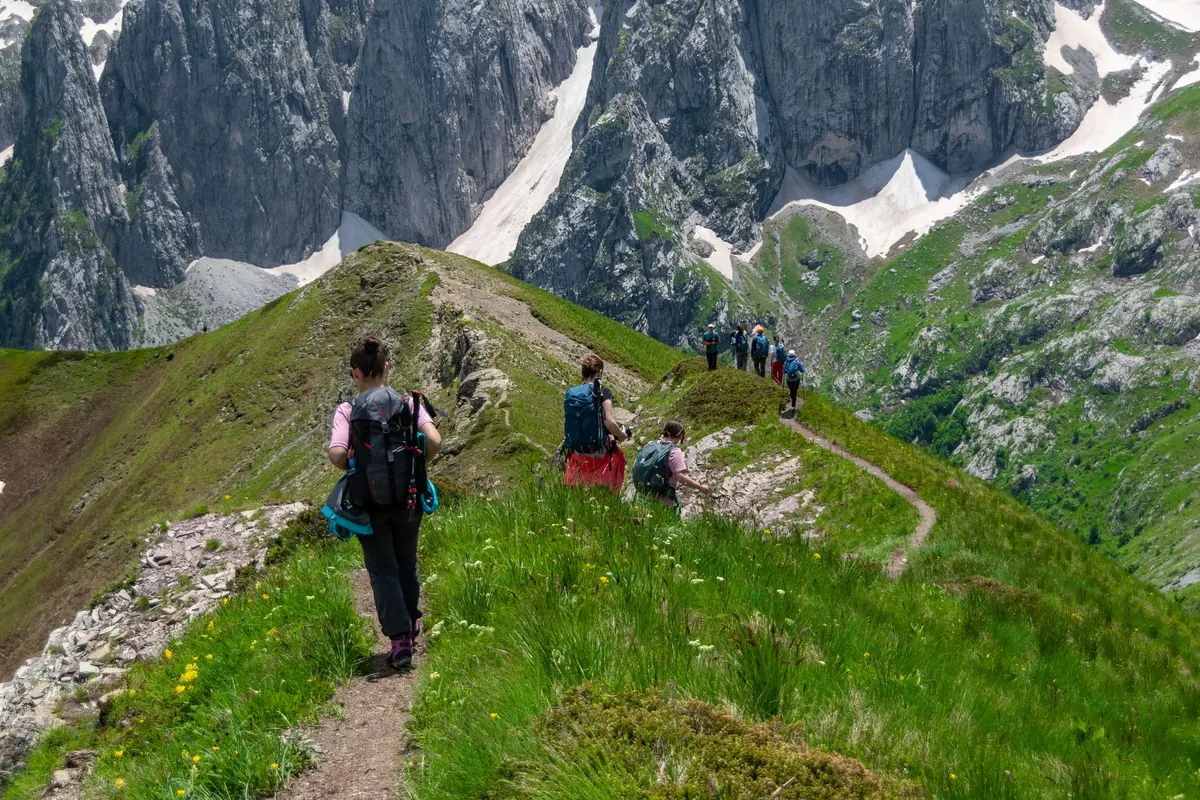
Photo: Luka Peric / Pexels